

The Three Options Every CFO Faces
When a technology company decides to expand its engineering capacity in a new geography, the financial analysis typically narrows to three options. Each has a fundamentally different cost and risk structure, and understanding those trade-offs - not just at the signing stage, but over a five-year horizon - is what separates strategic decisions from expensive mistakes.
Option 1: Traditional outsourcing. An OpEx model. You engage a vendor, pay a rate card (typically by hour or by headcount), and get flexibility without commitment. The advantages are real: no upfront capital, fast ramp, easy to scale down. The disadvantages are equally real: the talent you are paying for is not yours, the knowledge they accumulate walks out the door when the contract ends, and the effective hourly rate at premium vendor margins is often higher than it appears in the initial proposal.
Option 2: Greenfield subsidiary. A CapEx model. The company sets up its own legal entity in the target market, leases office space, recruits directly, and owns everything from day one. The advantages: full control, full IP ownership, maximum integration with company culture. The disadvantages: six to twelve months before the entity is operational, significant legal and compliance overhead, and all the recruitment risk falls on the parent company in a market where it may have no brand recognition or local HR expertise. The failure rate for greenfield engineering hub setups is higher than most companies admit publicly.
Option 3: Build-Operate-Transfer (BOT). A hybrid that sits between these extremes - and for many organizations, in the right conditions, the most rational choice.

How the BOT Model Works
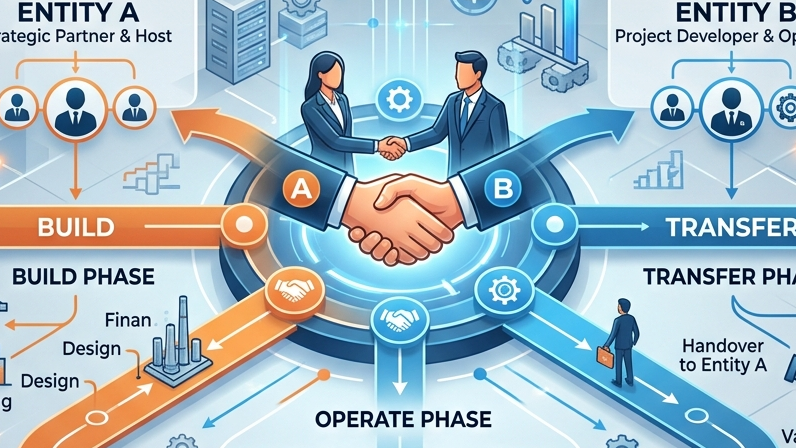
The Build-Operate-Transfer model has three phases, and the financial logic of each is distinct.
Build (months 1-6): The BOT partner - in this case, GTEMAS - establishes the operational foundation on the client's behalf. This includes registering the legal entity or operating under GTEMAS's existing entity, securing office space, building out the technical infrastructure, and recruiting the initial team. The client defines the hiring criteria, team structure, and technology standards. GTEMAS handles the local execution. The client pays a management fee and the fully-loaded cost of the team, but absorbs none of the legal, real estate, or HR infrastructure costs directly. Those risks remain with GTEMAS during this phase.
Operate (months 7-24): The team is functioning and producing. GTEMAS continues to handle local employment, payroll, compliance, facilities management, and HR operations. The client has full visibility and control over what the team works on and how it is managed day-to-day. This is not outsourced delivery - it is a captive team with operational support from a local partner. The client is building knowledge of the local market, the talent pool, and the operational requirements while GTEMAS bears the administrative burden.
Transfer (month 12-30, triggered by client): The client decides to internalize the operation. GTEMAS facilitates the transfer of the legal entity, the employment contracts, the leases, and all operational assets. The client now owns the team directly - as an independently operating subsidiary or as a branch of the parent entity, depending on the structure chosen at the outset. GTEMAS receives a transfer fee, typically structured as a function of team size and tenure.

The Financial Comparison in Detail
Running the numbers on a 50-person engineering team over three years illustrates why BOT appeals to CFOs who look beyond the first-year cost line.
A traditional outsourcing arrangement at a $45/hour blended rate (a reasonable mid-market figure for Southeast Asian engineering talent through a vendor) produces a predictable annual cost of approximately $4.7M for 50 FTEs at standard working hours. There is no exit cost, but there is also no residual value. At the end of three years, the company has spent $14M and retains nothing - no entity, no owned talent, no IP that isn't already in its codebase.
A greenfield subsidiary carries an upfront investment of $600K-1.2M in legal setup, fit-out, and initial recruitment - before any engineering work is delivered. Year one productivity is depressed while the team ramps. By year three, the fully-loaded cost per FTE is typically 15-20% lower than the outsourcing model, but the path to that efficiency was expensive and the failure risk in the first 12 months was real.
A BOT arrangement runs at a premium to greenfield for the first 18 months - the GTEMAS management fee adds 10-15% to the loaded cost. But that premium buys three things: eliminated setup risk, accelerated ramp-up (GTEMAS recruits from an existing talent network with known quality), and an option on ownership that can be exercised when the risk profile is acceptable. The transfer fee at month 24 is typically equivalent to 2-4 months of the team's fully-loaded cost - a predictable, one-time payment to acquire an asset that the company has already been running for two years.

The Governance Framework During the Operate Phase
The most common source of BOT failure is governance ambiguity during the Operate phase. Who makes hiring decisions? Who handles performance management? What happens when a key engineer wants to leave before the transfer? What are the client's rights if GTEMAS changes its pricing structure?
These questions need to be resolved in the contract before the Build phase begins, not negotiated under pressure when an issue arises. GTEMAS structures its BOT engagements with a Governance Committee - typically meeting monthly - that includes client leadership, GTEMAS local management, and HR representation from both sides. Decision rights are documented explicitly: the client has final say on technology choices and team direction; GTEMAS has operational authority over HR compliance, facilities, and local regulatory matters.
Change of control provisions, IP ownership from day one (all work product belongs to the client from the first commit), and pre-agreed transfer pricing formulas are table stakes for any serious BOT arrangement. Organizations that enter BOT agreements without these structures in place often find that the "operate" phase creates dependencies that make the transfer more expensive or more disruptive than anticipated.
The Valuation Case for Ownership
For technology companies that are investor-backed or planning a liquidity event, the BOT model has an additional dimension that does not appear in the operational P&L but matters significantly in the due diligence process.
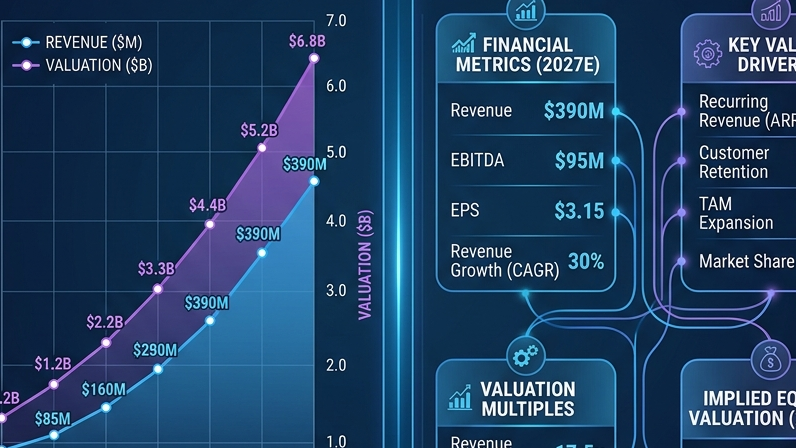
Investors value captive engineering talent differently from contractor relationships. A company with 100 engineers on its payroll - even in a subsidiary - signals scale, institutional knowledge, and IP ownership in a way that a company with 100 vendor contractors does not. The revenue multiples applied to software companies correlate with the stickiness and depth of their engineering capability, and that calculus favors internal headcount.
The BOT transfer fee, which might be $800K-1.5M for a team of 50, is often negligible relative to the valuation uplift that comes from converting contractor relationships to owned subsidiaries. This is not the primary reason to pursue a BOT arrangement, but it is a legitimate factor in the financial analysis - particularly for companies in a growth phase where the next funding round or exit event is a planning consideration.
The GTEMAS BOT Practice
GTEMAS has operated BOT engagements across multiple markets in Southeast Asia and South Asia, with transfer completions ranging from 18-month rapid-track arrangements to 36-month phased transfers for complex multi-country operations. Our local legal and HR infrastructure is already established, which eliminates the setup timeline that typically adds 3-6 months to greenfield arrangements.
We do not believe BOT is the right answer for every organization. For companies that need maximum flexibility and are not yet confident they want a permanent engineering presence in a specific market, traditional outsourcing remains a rational choice. For companies that are certain they want to own an engineering operation within 12 months and have the HR infrastructure to absorb it quickly, a direct greenfield setup may be faster and cheaper overall.
BOT is the right answer for organizations that want the optionality of ownership without the upfront risk, and that have enough confidence in their two-to-three-year strategy to commit to the transfer horizon. If that describes your situation, we would be glad to walk through the financial model with you in detail.