

A Different Kind of Shift
At GTEMAS, we have spent years working alongside businesses navigating the shifts that technology brings. We have seen the waves of Web, Mobile, Cloud, SaaS, and Blockchain each reshape the industry in their own way. We have watched organizations that moved early capture durable advantages, and organizations that waited find themselves scrambling to catch up.
What we are witnessing now with AI - particularly through the second half of 2025 and into 2026 - is fundamentally different from those previous waves. This is not a new tool to add to the stack. This is a shift in how work itself gets done: how software is specified, how it is built, how it is tested, and how teams are organized to do all of it.
This article reflects our direct observations from working closely with IT teams and business leaders across multiple industries, and our clear-eyed view on what this means for organizations that want to stay ahead of it.
What Is Actually Changing
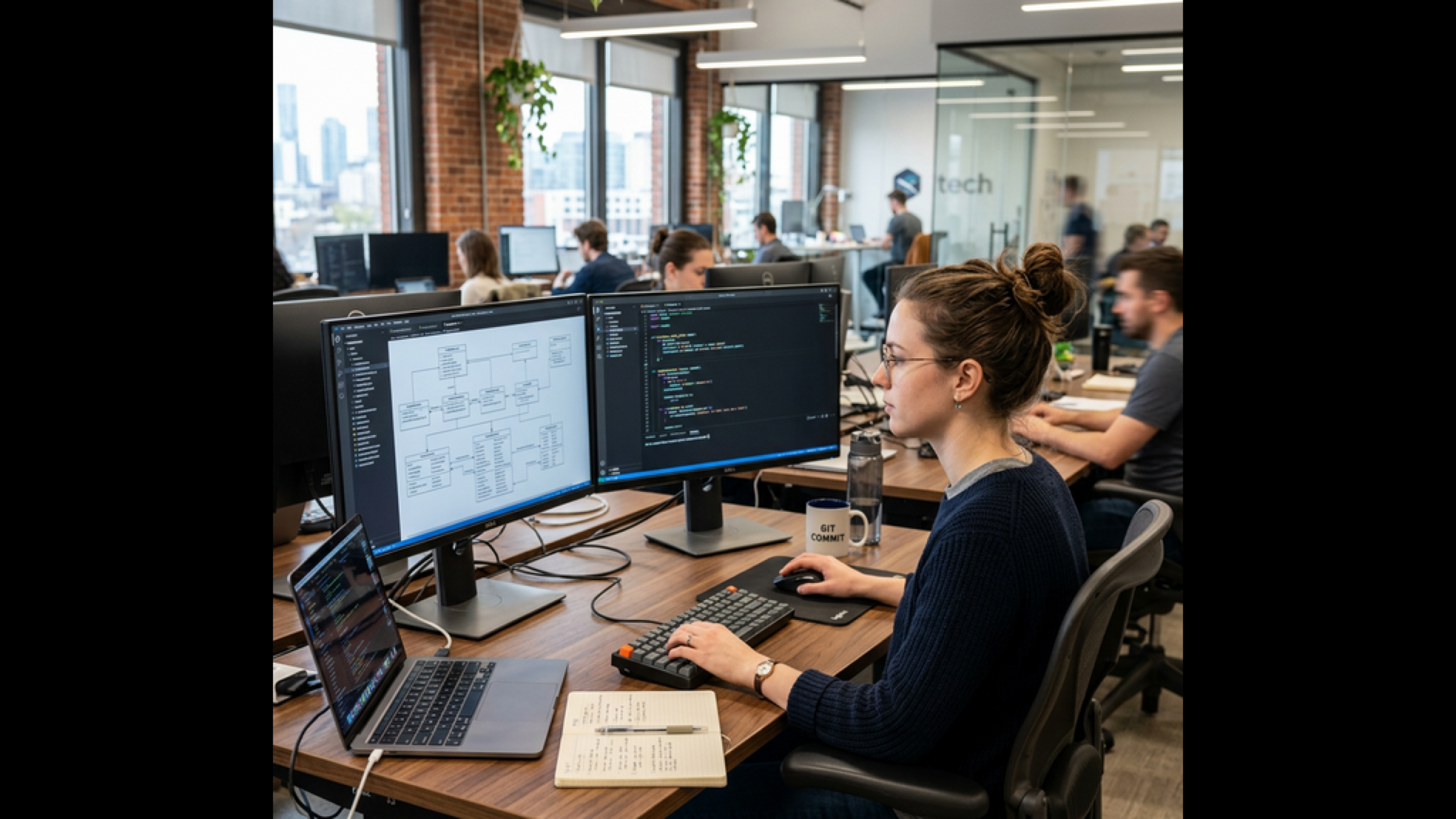
The IT industry is in the middle of a transition that most organizations have not yet fully processed. Development teams still write code. QA teams still run tests. Architects still design systems. But the proportion of time spent on execution is shrinking, and the work that matters most is shifting toward understanding the product, understanding the business, and governing what AI produces rather than producing everything from scratch.
This is not a future scenario. Companies are already restructuring roles and hiring profiles around this reality today. Large technology firms are reducing junior headcount while maintaining or increasing output. Startups are shipping production-ready products with engineering teams a fraction of the size that would have been required two years ago.
From an operational standpoint, the impact is significant: in our own engagements, a team that previously required 8 to 10 people to deliver a product can often operate effectively with a much smaller core, without sacrificing output quality. This is not because people are being eliminated. It is because each individual's capacity has expanded considerably with AI support - not just in coding, but in how requirements get captured, how test coverage gets built, and how deployments get monitored. An engineer who once hand-wrote every line now spends more of the day reviewing and refining AI-generated output across the pipeline - if they have the judgment to tell the good from the mediocre. For business leaders evaluating team structure and investment, this represents the most meaningful shift in IT operations seen in a generation.
What This Means for Your Business
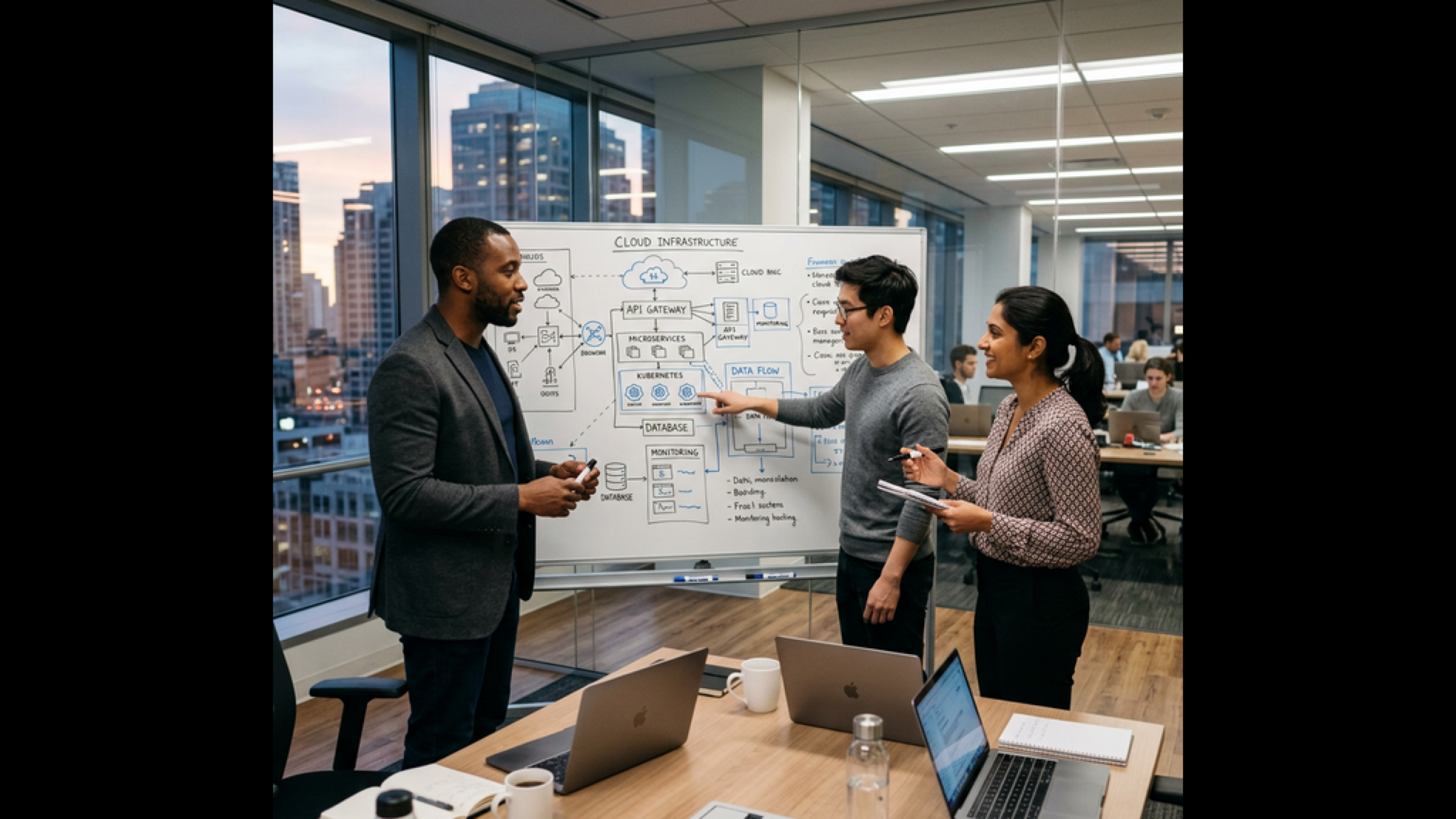
For organizations currently relying on a growing list of software subscriptions and third-party tools, the calculus is beginning to change. With the right team and AI capabilities in place, building proprietary solutions in-house is becoming a more viable and cost-effective option than it has been at any point in the past decade. The per-feature cost of custom software is falling, and the control and competitive advantage that comes with owning your own tooling is becoming more accessible to mid-market companies, not just large technology enterprises.
This creates a real opportunity - but it also raises the bar for the people inside your organization. The T-shaped skill model that has defined IT talent for the past decade - deep expertise in one area, broad awareness of others - is evolving into something closer to a V-shape. Your teams still need domain depth, but they also need to be wide enough to understand, coordinate, and govern across multiple parts of a product simultaneously. A developer who can only write code is less valuable than a developer who can write code, evaluate AI-generated output, understand the business context it needs to operate in, and communicate clearly about trade-offs.
Organizations that recognize this shift early and invest in developing that kind of talent will have a meaningful structural advantage over those that do not. The advantage compounds: teams that build in this mode get faster over time as their AI workflows mature.
AI Will Not Eliminate Roles - But It Will Differentiate Teams
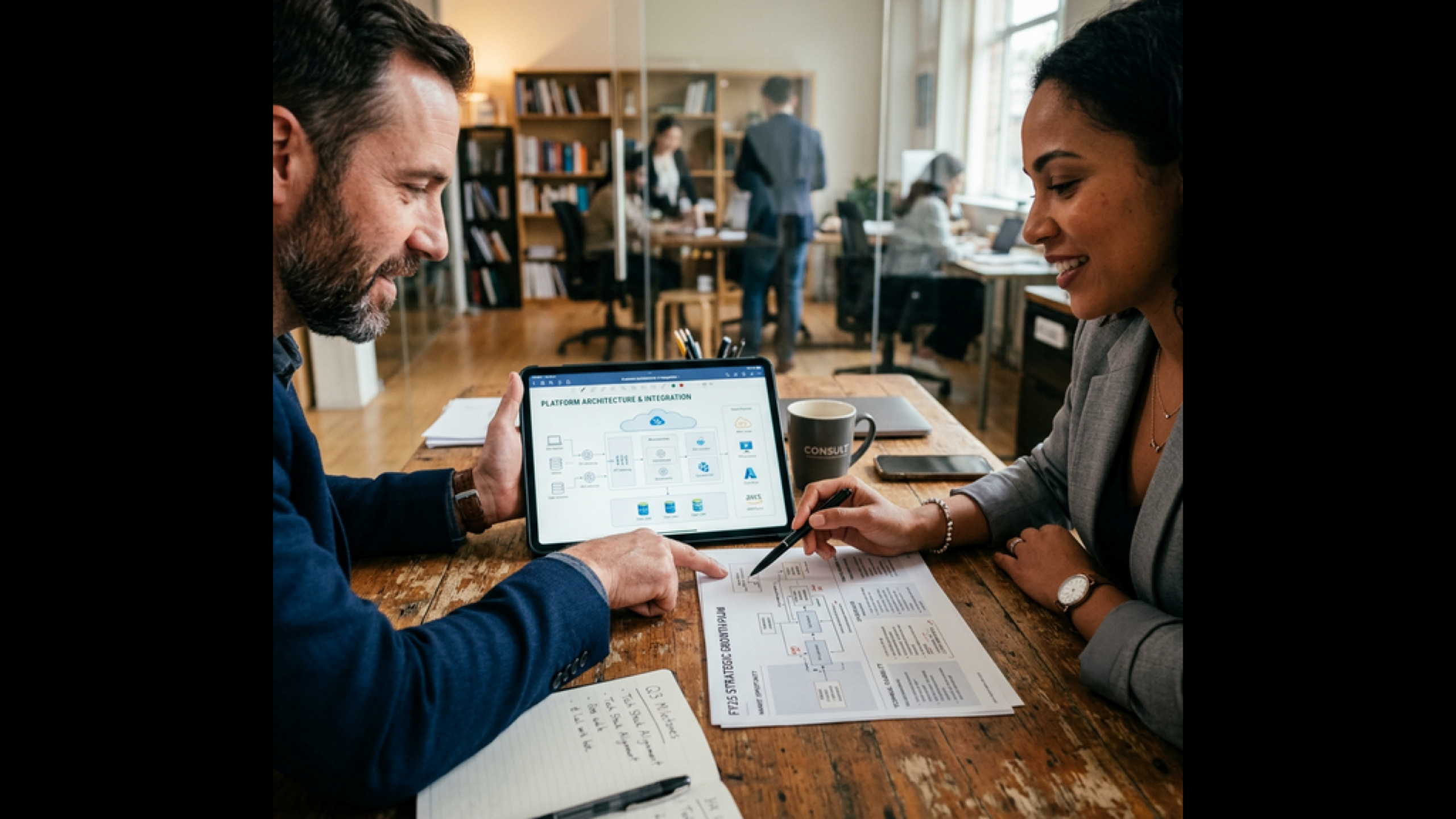
Roles such as Business Analyst, Project Manager, QA Engineer, Designer, DevOps, and Developer are not disappearing. However, the boundaries between them are becoming less rigid, and the expectations for each are changing. A QA engineer today who cannot write code to automate their test cases is less competitive than one who can. A product manager who cannot articulate requirements precisely enough for an AI model to generate useful prototypes is less valuable than one who can.
Teams that adapt will find they can do more with less. They will ship faster, with fewer defects, and with greater responsiveness to changing requirements. Teams that do not adapt will find their competitive position narrowing - not dramatically overnight, but steadily, across every sprint.
Deep specialization still holds value - but only when it can be systematized and paired effectively with AI. The professionals who will contribute most in this environment are those who can identify where AI output falls short, ask the right questions to course-correct, and make sound judgments about what is usable and what needs rework. That capacity for critical evaluation is genuinely difficult for AI to replicate, and it is where human expertise becomes most valuable.

Where Investment Should Be Directed Now
For business leaders planning ahead, the skills and capabilities worth developing within your teams in the near term are the following.
- Deeper product and business understanding. As AI handles more of the execution, the ability to define what should be built and why becomes the critical input. Teams that understand the business deeply will direct AI far more effectively than those focused purely on technical output. A vague prompt produces a vague result. Precision in requirements is a new competitive skill.
- Systems thinking. The ability to see how components connect - across product, process, technology, and data - is what separates teams that use AI well from those that use it narrowly. AI can generate a function. Knowing whether that function belongs in the architecture at all is a human judgment.
- Effective AI collaboration. This means knowing how to frame problems clearly, evaluate outputs critically, and iterate efficiently. It is a skill that compounds over time and creates measurable differences in throughput between high-performing teams and average ones.
- Strong review and governance capability. As AI generates more output faster, the bottleneck shifts to human judgment. Investing in structured review processes and clear quality standards is now a direct investment in the reliability of your output.
- Foundational technical knowledge. Teams with strong fundamentals in software architecture, data modeling, and security are significantly better positioned to leverage AI than those without. That foundation is what allows people to catch errors, spot gaps, and push AI further than a junior practitioner can.

The Broader Picture
Work in IT does not disappear with AI - it moves. Like capital in a market, it flows toward those who are positioned to capture it. The organizations and individuals who adapt will find themselves taking on work and opportunities that previously required far larger teams or budgets. Those who do not will see that work flow to competitors who have built the capability to deliver it faster and more cost-effectively.
This is not a binary outcome - organizations do not simply win or lose. But the compounding effect of AI-augmented delivery over two or three years creates a gap that becomes increasingly difficult to close. Teams that invest now in the skills, workflows, and governance structures that make AI effective will be operating from a position of structural advantage. Teams that treat AI as a novelty or wait for the technology to "mature further" are making a choice, even if it does not feel like one.
The question for business leaders is not whether AI will change your IT operations. It already is. The more important question is whether your organization is moving with enough intentionality to be on the right side of that shift.
How GTEMAS Can Help
The transition underway is significant, but it is also early enough that organizations have real options. No one is so far behind that the gap cannot be closed - but the window for doing so without significant disruption is narrowing.
At GTEMAS, we work with business and technology leaders to assess where their teams stand today, identify the capability gaps that matter most, and build a practical path forward. Whether that means restructuring team compositions, introducing AI into existing delivery workflows, or rethinking how products are governed and built, we bring both the engineering experience and the strategic perspective to help organizations move with confidence rather than anxiety. Every engineer we bring into that plan comes from our Talent Ecosystem carrying a verified Skill Profile, so the V-shaped judgment this shift demands is something we can point to evidence of, not just ask you to take on faith.
If this reflects what your organization is navigating right now, we would welcome the conversation.