

The Argument You're Not Having
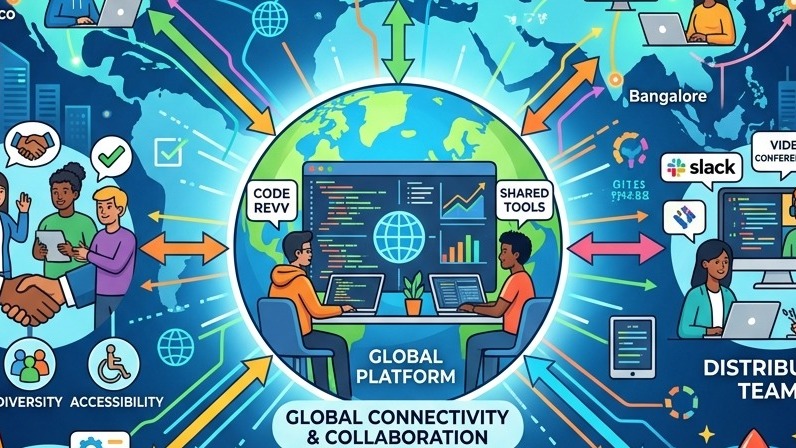
Diversity in technology teams is typically framed as an HR and ethics conversation. Representation metrics, hiring targets, inclusion programs. Those things matter, and they are genuinely important. But there is a parallel argument that technology leaders should be having and usually are not: diverse engineering teams produce measurably better software, not because of moral superiority but because of how the engineering process itself works.
Software is built through a sequence of decisions made under uncertainty. What does the user actually need? What edge cases have we not considered? Which assumption in this architecture will prove wrong in 18 months? The quality of these decisions depends directly on the cognitive diversity of the people making them - the variety of mental models, prior experiences, and frameworks for reasoning about problems that the team brings to each decision point.
Homogeneous teams have a structural disadvantage: their blind spots are shared. When every engineer on a team has similar educational backgrounds, similar cultural contexts, and similar professional experiences, the scenarios they fail to anticipate tend to be the same scenarios. A team that built payment infrastructure entirely from an urban, high-bandwidth perspective may not think to test for 2G connectivity. A team built exclusively from one cultural context may build onboarding flows that feel intuitive to them and confusing to users from different interaction conventions. These are engineering quality problems, not HR problems.
Time Zone Coverage as an Architecture Decision
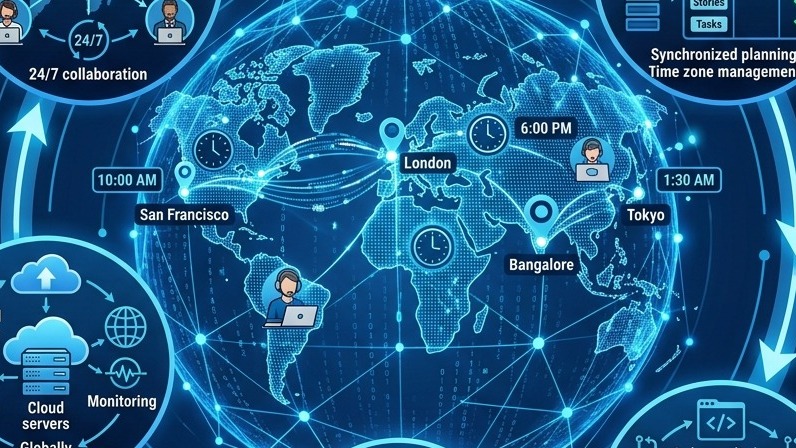
One concrete advantage of building globally distributed teams that is rarely discussed honestly: you can architect your engineering organization to provide genuine 24-hour coverage without the physical and emotional cost of rotating on-call shifts within a single time zone.
GTEMAS operates engineering teams across Southeast and South Asia, spanning UTC+5:30 to UTC+8. In practice, this means that when a production incident occurs at 2am in Singapore, there is an engineer in Vietnam or India for whom it is a reasonable working hour. This is not about exploiting time zone arbitrage for labor costs - it is a fundamentally different organizational resilience model.
The engineering implication is significant: services that previously required one team to hold pager duty around the clock can transition to a follow-the-sun model where ownership passes between teams at natural shift boundaries. Mean time to response drops. Engineer burnout from off-hours incidents drops. And perhaps most importantly, the team that owns a service during regional business hours is fully rested and engaged when issues actually arise.
This model requires deliberate investment in knowledge transfer processes and documentation standards - if handoffs are informal, critical context gets lost at shift boundaries. But organizations that build these processes find that the documentation discipline pays dividends beyond incident response: it also improves onboarding time and reduces key-person dependencies.
Communication Protocols for Distributed Teams
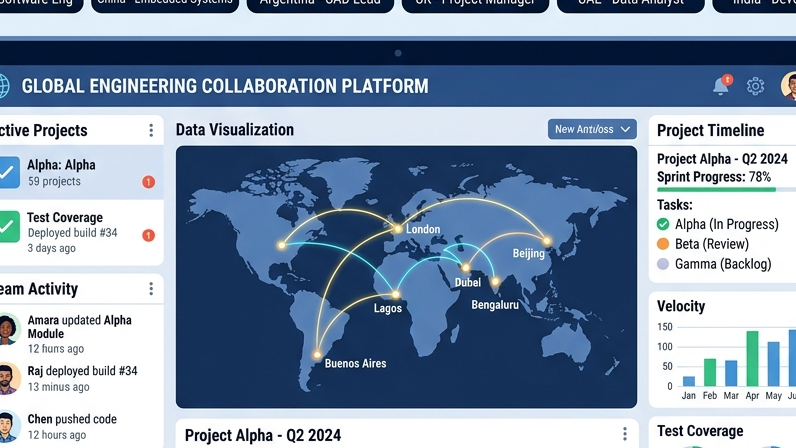
The failure mode of global teams is not technical - it is communicative. Decisions made in one office that the team in another region discovers days later. Context that exists only in Slack threads that nobody searches. Code review feedback that reads as dismissive because it stripped the politeness conventions of one culture without understanding another.
Effective distributed team communication requires explicit protocols, not just tools. A few that consistently make a difference:
- Write-first culture for decisions. Any decision with cross-team implications must be documented asynchronously before it is acted on - not after. The discipline of writing a short decision document forces clarity that verbal conversations rarely achieve, and it creates a record that remote teammates can engage with on their schedule.
- Explicit overlap windows. Rather than pretending that flexible working hours means availability at all hours, establish explicit two-hour windows per day where all teams have overlap. These windows are protected for synchronous coordination - architecture discussions, difficult code reviews, cross-team dependencies. Everything else is async.
- Structured async stand-ups. Text-based daily updates that follow a consistent format (completed, in progress, blocked) consume minimal time and provide the cross-team visibility that daily video calls try to achieve with ten times the coordination cost.
- Incident post-mortems in writing. After any significant incident, a written post-mortem that all teams can read, annotate, and respond to asynchronously spreads learning across time zones far more effectively than a single call that half the organization cannot attend.

Cultural Intelligence in Code Reviews
Code review is where the cultural dynamics of engineering teams become most visible, and where diversity either becomes a strength or a source of friction. In high-context cultures - where communication relies on shared context and indirect expression - a comment like "this seems inefficient" may be a strong critique delivered diplomatically. In low-context cultures, the same comment may be read as mild curiosity. Misread in either direction, it either fails to communicate the actual problem or comes across as hostile when it was not intended that way.
This is not a hypothetical. Engineering teams that span East and Southeast Asia, South Asia, and Western regions navigate these dynamics constantly. The organizations that handle it well have developed explicit norms around code review communication that do not rely on cultural inference:
- Distinguish between blocking issues, strong suggestions, and optional nits with explicit labels - not embedded in tone
- When suggesting a change, explain the technical or maintainability reason, not just the preference
- Separate architectural concerns from stylistic ones - the former warrant discussion, the latter should be automated with linters
- Review the code, not the person - "this function does X when it should do Y" rather than "you did X wrong"
These are good code review practices in general, but they become critical when the team's cultural communication norms differ. Explicit protocols remove the need for cultural inference and make the review process work on technical merit.
The Retention Question
Building diverse global teams is substantially harder than retaining homogeneous local ones. The challenges are real: career path visibility for engineers in different regions, compensation benchmarking across markets, the risk that distributed engineers feel like "offshore contractors" rather than genuine team members, and the natural human tendency to make informal decisions through social channels that favor people physically present.
Retention in distributed diverse teams requires structural responses to these risks, not just cultural aspiration:
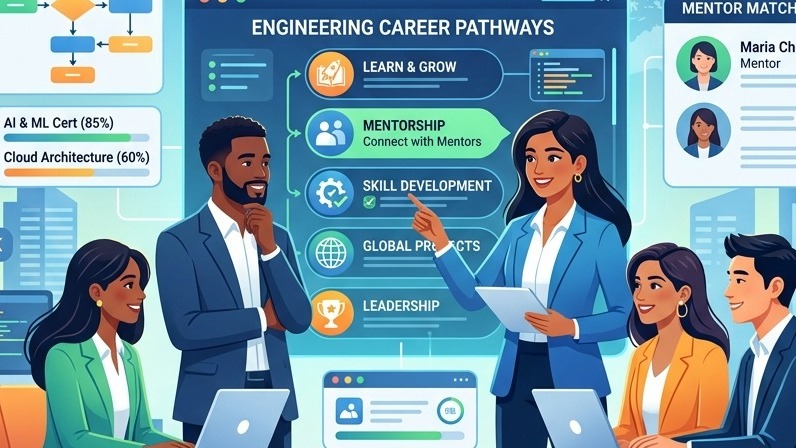
- Engineering career ladders that are visible and consistently applied across all regions - not just at headquarters
- Rotation of technical leadership opportunities across teams, not concentration in one geography
- Deliberate inclusion of distributed engineers in strategic decisions - as participants, not recipients of decisions made elsewhere
- Regular face-to-face investment: annual team gatherings that bring distributed teams together for relationship-building that async communication cannot replicate
One data point worth sharing: GTEMAS engineers in Vietnam and Singapore have an average tenure well above industry norms for software development roles in those markets. The primary factor is not compensation - it is the nature of the work and the genuine ownership engineers have over technical decisions.
How GTEMAS Builds Across Borders
GTEMAS's model for client engineering teams starts from a different premise than traditional offshore outsourcing. We build integrated teams - not "your team here, our team there" but genuinely shared product ownership that spans geographies. This requires investment that many clients are not expecting: time spent aligning on engineering culture, explicit communication protocols, and regular co-location investments that make the distributed model actually work.
The result is not just cost efficiency, though the economics are real. It is engineering quality from diverse perspectives, resilience from geographic distribution, and coverage that a single-location team cannot provide without burning people out.
Building a team that spans cultures and time zones is an organizational capability, not a vendor arrangement. If you are considering how to scale your engineering capacity globally while maintaining quality and culture, we would welcome the conversation about what that looks like in practice.